Salon Revenue Growth Automation Examples That Work
By Rowena Tulacz · · 10 min read
TL;DR:
- Automation tools like AI front desks, deposits, and rebooking campaigns significantly increase salon revenue by reducing missed bookings and no-shows. Selecting the right platform involves evaluating features for client communication, payment handling, and operational insights tailored to your salon's specific revenue leaks. Implementing automation thoughtfully, while maintaining personal interactions, leads to measurable growth and better client relationships.
Running a salon manually is expensive in ways that don't always show up on your P&L. Missed calls become missed bookings. Forgotten follow-ups mean clients drift to competitors. Staff time spent on scheduling and reminders is time not spent on client experience. The good news is that salon revenue growth automation examples now exist across every operational layer, from front desk AI to intelligent rebooking campaigns, and they are producing measurable results for salons of every size. This article breaks down the most effective ones so you can decide where to start.
Table of Contents
- Key Takeaways
- 1. What to look for in salon automation tools
- 2. AI-powered digital front desk and booking assistant
- 3. Smart appointment scheduling with automated reminders and deposits
- 4. Automated rebooking prompts and intelligent marketing campaigns
- 5. Centralized team communication and operational dashboards
- 6. Side-by-side comparison of salon automation examples
- My honest take on salon automation after working with dozens of operators
- How Byrcs helps salons automate revenue growth end to end
- FAQ
Key Takeaways
| Point | Details |
|---|---|
| AI front desk pays for itself | A 24/7 AI booking assistant captures revenue from calls and messages your team would otherwise miss. |
| Deposits reduce no-shows | Requiring a 10-20% deposit at booking increases client commitment and protects your revenue. |
| Rebooking automation fills gaps | Personalized prompts sent 6-8 weeks post-appointment keep your calendar full without staff effort. |
| Unified dashboards drive decisions | Real-time reporting on bookings, no-shows, and revenue helps you act on data, not guesses. |
| Start focused, then scale | Implement one or two automations well before expanding to avoid overwhelming your team or clients. |
1. What to look for in salon automation tools
Before reviewing specific salon revenue growth automation examples, you need a clear framework for evaluating any tool you consider. Not every automation platform is built with salons in mind, and choosing the wrong one wastes money and creates more work.
The right tool should address these core areas:
- No-show reduction: Does the system send automated SMS and email reminders before appointments? Can it collect deposits at the time of booking?
- Multi-channel communication: Does it handle calls, texts, and emails from a single interface so nothing falls through the cracks?
- Upsell capability: Can it send post-appointment product recommendations or service upgrade prompts automatically?
- Payment integration: Does it process deposits, prepayments, and retail purchases without requiring a separate system?
- Calendar sync: Does it update in real time across all booking channels to prevent double bookings?
- Brand customization: Can you set the tone, language, and style of automated messages to match how your salon communicates?
Salon profit optimization starts with picking tools that solve your biggest revenue leaks first. If no-shows are your primary problem, prioritize deposit and reminder features. If client retention is the gap, look for tools with automated rebooking and loyalty campaign capabilities.
Pro Tip: Before signing any contract, map out your top three revenue leaks. The right automation tool should address at least two of them out of the box.
2. AI-powered digital front desk and booking assistant
This is the automation category with the most immediate revenue impact for most salons. An AI-powered front desk handles calls, messages, bookings, payments, and reschedules using live client data, operating around the clock without a human behind the desk.
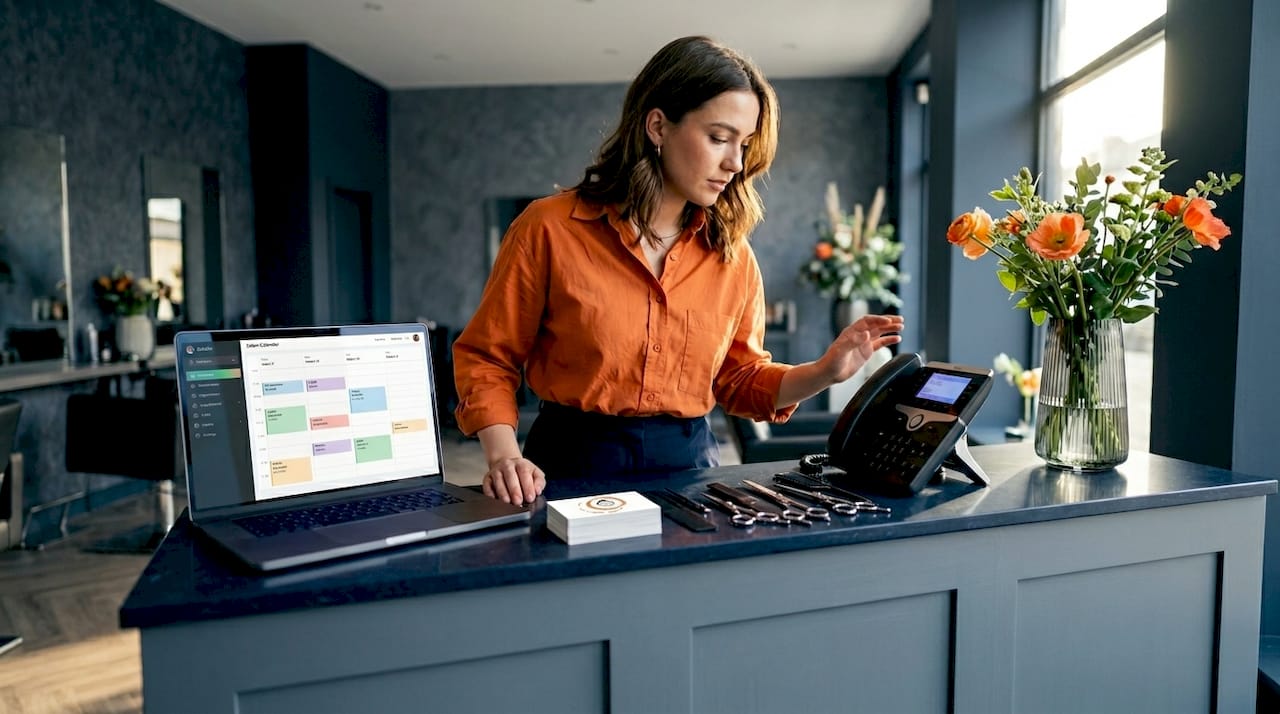
Fresha's AI Concierge is one of the most cited examples in this space. It handles calls and bookings simultaneously, responds to client messages, processes payments, and manages reschedules, all with access to real-time calendar data. Early pilots showed measurable gains in booking conversion and a reduction in no-shows. The system does not put clients on hold. It does not forget to follow up. It does not go on break.
The financial case is straightforward. A salon that misses five calls a day, each representing an average booking value of $80, is leaving $400 a day on the table. An always-on revenue channel captures those bookings automatically. Fresha, which operates a $15 billion GMV platform supporting over 130,000 salons worldwide, built this feature specifically because missed calls were one of the top revenue problems salons reported.
Key capabilities to look for in an AI front desk system:
- 24/7 call and message handling with live booking data
- Unified inbox combining calls, texts, and emails in one place
- Automated payment collection at the point of booking
- Customizable communication style to reflect your salon's brand voice
- Team notifications when human follow-up is needed
The human touch is not eliminated here. It is redirected. Your team handles the in-person experience while the AI handles the logistics, and clients get faster responses at any hour.
3. Smart appointment scheduling with automated reminders and deposits
Scheduling automation goes beyond simply putting appointments in a calendar. The revenue impact comes from what happens before and after the appointment is booked.
Automated reminders reduce no-shows significantly, and requiring a deposit of 10-20% at the time of booking increases client commitment and creates a steadier revenue flow. A client who has already paid a deposit is far less likely to cancel at the last minute or simply not show up.
Modern scheduling tools offer:
- Automated SMS and email confirmations sent immediately after booking
- Reminder sequences at 48 hours and 24 hours before the appointment
- Deposit collection integrated directly into the booking flow
- Customized intake forms that gather client preferences before they arrive
- Real-time calendar sync across your website, social profiles, and booking apps
The intake form piece is underused and worth highlighting. When clients fill out a form at booking, they share preferences, allergies, and service history. Your stylist walks in prepared. That preparation improves the service experience, which directly supports retention and upsells.
Pro Tip: Set your deposit amount to cover at least the cost of the time slot. If a no-show happens, you are not losing money. If the client shows up, the deposit applies to their service.
4. Automated rebooking prompts and intelligent marketing campaigns
Keeping your calendar full is a revenue problem as much as a marketing one. Automating the rebooking process removes the guesswork and the manual effort, and it works while your team is focused on clients in the chair.
Personalized rebooking prompts sent automatically 6-8 weeks after a service appointment keep revenue predictable and clients engaged without requiring a single staff action. The message references the client's last service, suggests the right timing for their next visit, and includes a direct booking link. That specificity makes the message feel personal rather than generic.
Beyond rebooking, intelligent marketing automation handles:
- Referral campaigns with unique booking links, such as a "bring a friend and you both save 10%" offer that scales client acquisition automatically
- Social media integration with "tap to book" CTAs embedded in your Instagram and Facebook profiles, converting followers into paying clients without any manual effort
- Post-appointment product recommendations triggered by the specific service a client received
- Loyalty milestone messages that reward repeat visits and encourage higher spend per visit
The role of AI in retention is growing precisely because personalization at scale was previously impossible without a large team. Automation makes it possible for a two-chair salon to communicate with the precision of a high-end spa group.
5. Centralized team communication and operational dashboards
Revenue growth for salons is not only a client-facing challenge. Internal inefficiencies, from scheduling conflicts to inconsistent service delivery across locations, quietly drain profitability. Centralized communication and analytics tools address this from the inside out.
Team chat integrated with client data means your stylists see appointment notes, client preferences, and service history before the client walks in. Load-balancing features distribute bookings evenly across your team, preventing one stylist from being overbooked while another sits idle. For multi-location operations, standardized workflows and cross-branch analytics let you compare performance and identify where revenue is being left behind.
Real-time dashboards give you visibility into:
| Metric | What it tells you |
|---|---|
| Booking fill rate by stylist | Who has capacity and who is at risk of burnout |
| No-show rate by service type | Which services need deposit requirements most urgently |
| Revenue per client visit | Whether upsell automations are working |
| Rebooking rate | How well your retention campaigns are performing |
| Average time between visits | When to trigger your next automated rebooking prompt |
Data-driven decisions replace gut-feel guesses. When you can see that your Tuesday afternoon slots have a 30% no-show rate, you know exactly where to apply deposit requirements first.
6. Side-by-side comparison of salon automation examples
This table gives you a quick reference for the four main automation categories covered in this article, including their primary benefit, ideal salon size, and relative complexity to implement.
| Automation type | Primary revenue impact | Best suited for | Implementation complexity |
|---|---|---|---|
| AI digital front desk | Captures missed bookings 24/7 | All salon sizes | Medium |
| Smart scheduling with deposits | Reduces no-shows and cancellations | Salons with high-value services | Low |
| Rebooking and marketing automation | Increases client retention and repeat visits | Established salons with client history | Medium |
| Centralized dashboards and team tools | Improves operational efficiency and revenue visibility | Multi-stylist or multi-location salons | Medium to high |
If you are just starting with automating salon sales, smart scheduling with deposits is the lowest-effort, highest-return starting point. If you already have scheduling handled, the AI front desk and rebooking automation will compound your results quickly.
My honest take on salon automation after working with dozens of operators
I have worked with enough salon owners to say this clearly: the biggest mistake I see is treating automation as a replacement for client relationships rather than a support system for them.
The salons that see the strongest results, think 30% or more in revenue growth, are the ones that use automation to handle logistics while protecting every human touchpoint that matters. The booking confirmation can be automated. The reminder can be automated. But when a client calls upset about a service, a person needs to pick up the phone.
I also see owners over-invest in complex platforms before they have mastered the basics. Start with appointment setting automation and get your deposit and reminder workflows running cleanly. Then layer in rebooking campaigns. Then add the AI front desk. Scaling thoughtfully beats launching everything at once and managing chaos.
The other thing I want to say plainly: track your numbers before and after every automation you implement. If you cannot measure the impact, you cannot improve it. CRM-driven automation strategies have produced 300% revenue increases for some operators, but only because those operators knew their baseline and adjusted their workflows based on real data.
Automation is not a set-it-and-forget-it system. It is a living part of your business that gets better the more attention you give it.
— Rowena
How Byrcs helps salons automate revenue growth end to end
If you are ready to move from reading about automation to actually implementing it, Byrcs builds exactly this kind of system for hair salons and service businesses.
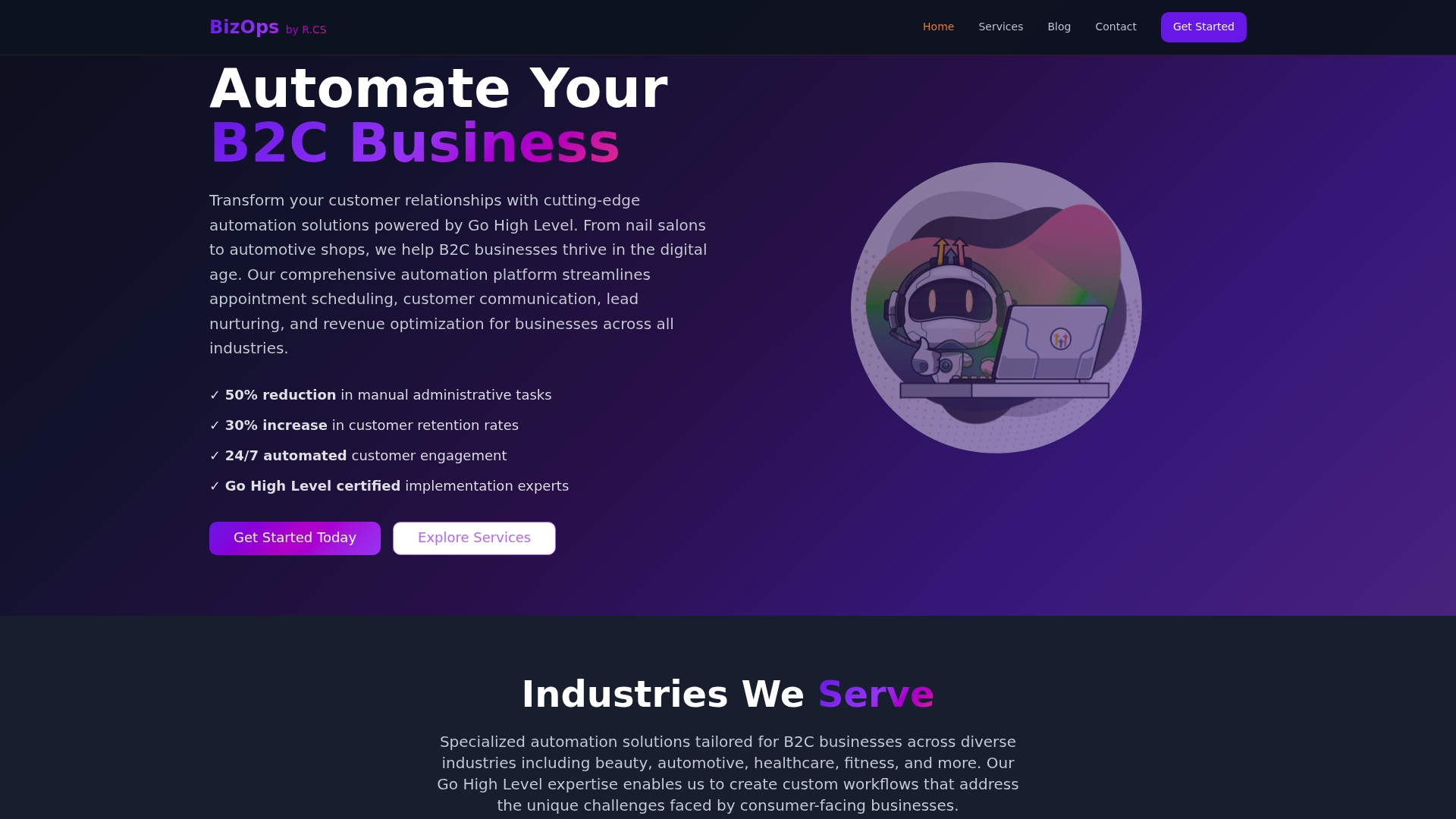
Byrcs uses the Go High Level platform to deploy tailored automation workflows for salon owners, covering booking reminders, deposit collection, client engagement sequences, rebooking campaigns, and payment processing. Salons working with Byrcs have reported a 30% increase in revenue and 95% client satisfaction following automated implementations, with manual tasks reduced by an average of 50%.
Whether you operate a single-chair suite or a multi-location brand, Byrcs configures the system to match your service menu, your brand voice, and your growth goals. Explore the hair salon automation solutions Byrcs offers, or visit bizops.byrcs.io to learn how the platform works for service businesses like yours.
FAQ
What is the fastest automation to implement for salon revenue?
Automated appointment reminders with deposit requirements are the quickest to set up and deliver immediate results by reducing no-shows and protecting revenue from last-minute cancellations.
How does an AI front desk increase salon income?
An AI front desk captures bookings from missed calls and messages around the clock, converting inquiries that would otherwise go unanswered into confirmed, paid appointments.
Can small salons benefit from marketing automation?
Yes. Automated rebooking prompts and referral campaigns work for salons of any size, and they require no ongoing staff effort once the initial workflow is configured.
What metrics should I track to measure automation success?
Focus on booking fill rate, no-show rate, rebooking rate, and revenue per client visit. These four numbers tell you whether your automation workflows are producing real results.
How do I avoid over-automating my client communications?
Keep automated messages focused on logistics, such as confirmations, reminders, and rebooking prompts, and preserve personal communication for service feedback, complaints, and relationship-building moments.
Want this set up for your business?
Book a free 30-minute strategy call and we'll map out your automations together.
Book a Free Call